Monday, February 3, 2014
Human is a slickly designed fitness tracking app that works without any hardware devices. You just launch the app, set it up and you’re all done. Launched in September, the app received its first major update.
“First and foremost, the update is a massive upgrade to our tracking system,” co-founder and CEO Renato Valdés Olmos told me. “Apart from improved accuracy and battery life, Human now also tracks indoor and stationary activity, as long as you have your phone on you.”
At heart, Human remains a passive iOS app designed to help you stay healthy. The goal is to move for 30 minutes every day, and to keep up with this simple habit. The company calls it the ‘Daily 30′. As it is extremely simple, keeping up with Human is easier than with competitive fitness systems.
After setting up the app, you can forget about it. Whenever you reach the goal, you get a push notification alerting you that you are staying healthy today — it’s as simple as that.
But there was a flaw. Until today, only outdoor activities were tracked. You could dance all night long without reaching the Daily 30. Now, Human tracks indoor activities and adds them to your Daily 30. You don’t need an iPhone 5S, as long as you have an iPhone 4S and up, you are good to go.
Other refinements came with the update as well. There are a few more stats now, you can see your streak and get badges. And of course, you can still tap on the big number to get more details about your activities. For example, as Human works with the phone’s GPS, you can even see where you ran last night.
While Human is much simpler than Fitbit and others, it all comes down to staying healthy — and it actually works. “The metric we’re really proud of however is qualitative,” Valdés Olmos said. “Humans move 40 percent more 6 weeks after downloading the app, a steady habit change.”
The next step for Human is to go beyond the Daily 30. You can reward users for some activities for example, and Human users should see that in future updates. As long as the emphasis remains on design and simplicity, the app will still be different enough to convince casual fitness app users.
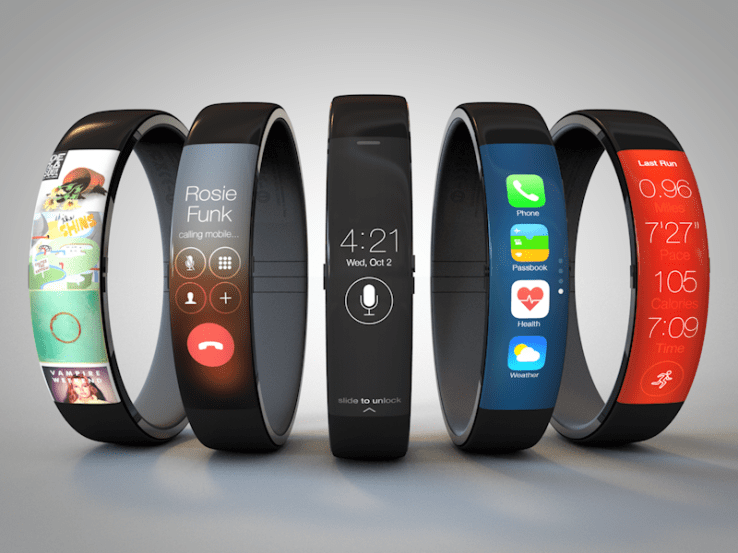
Apple’s work on an upcoming smartwatch includes explorations of induction charging and solar-powered batteries, according to a new report from the New York Times. As part of a larger piece about battery tech in general, the NYT revealed that Apple has been working on tests involving wireless induction charging for the smartwatch, and methods for incorporating solar panels into the display to draw power from the sun, and potentially ambient light.
Both of these are noted as technology in the testing phase for a wrist-mounted Apple wearable, which means they’re not necessarily very far along and likely not on tap for an Apple iWatch should it arrive sometime within the next year. The solar charging in particular, for example, is said to be years away from making its way into shipping product, according to the NYT’s source.
It does address a major pain point with current wearable tech, however, which might inform a hypothesis of what Apple is focusing on with any wrist-based smart device it is working on. We’ve heard from 9to5Mac that the iWatch will have a health and fitness focus, working with a new app that will come pre-installed on iOS 8 called “Healthbook.” Hardware details remain thin, but Apple did previously look into motion-based kinetic charging, which also lends credence to rumors that it’s exploring a range of power options.
Battery life for wearables is a huge concern, and the reason why is continued adoption: No end user is eager for the chance to have to remember to charge yet another device, of course, and the problem is made worse when, in forgetting to charge a wearable even once, they notice no overall impact to their lives. The double challenge then is to build a smartwatch that becomes integral to a user’s general routine, such that they’ll actively remember to charge it with the same frequency as their phone, and also to make it so that charging is a fairly infrequent requirement.
Apple has managed to sell a lot of things to people who neither users nor critics ever would’ve predicted they’d “needed” to begin with, with the iPad being the big shining example. They can probably do the same for the smartwatch, and these reports of their progress in its development signal to me they’re innovating in the right areas.